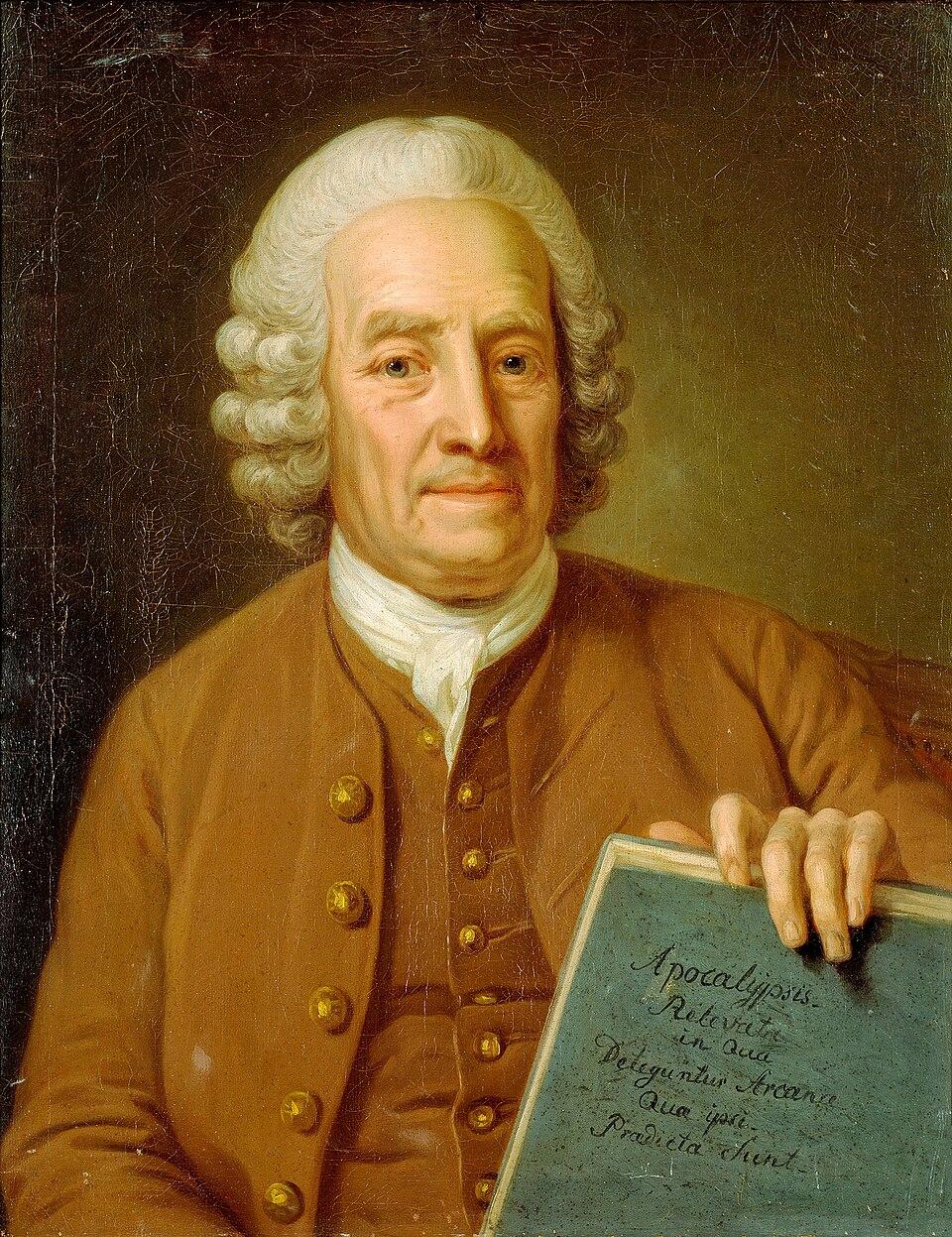
Emanuel Swedenborg
Swedish scientist, philosopher and theologian
Born in Stockholm, 1688. Died in London, 1772.
After a career in science and mining he wrote extensively about a spiritual world he said he had visited in visions.
Biography
Emanuel Swedenborg was the son of a Lutheran bishop and one of the most accomplished Swedish scientists of his day. He studied at Uppsala, travelled widely in Europe, and served for three decades as an assessor on Sweden's Board of Mines, publishing on metallurgy, mathematics, anatomy and the workings of the brain.
In his mid-fifties he underwent a religious crisis, recorded in a private journal of dreams. From 1745 he said that his inner sight had been opened and that he could converse with spirits and angels while fully awake. He resigned his post in 1747 and spent the rest of his life writing theology, publishing most of it anonymously and in Latin.
Historical context
Swedenborg wrote at the height of the Enlightenment, and his career joins its two halves: the confident natural science of the early eighteenth century and the turn towards inner experience that followed. Immanuel Kant took him seriously enough to write a sceptical book about him in 1766.
Teachings
His theological writings describe a spiritual world with its own order. In Heaven and Hell he says that a person wakes after death in an intermediate world of spirits, much like this one, and gradually moves towards the community that matches what they most deeply love. On this account no one is sent to heaven or hell; people go where they are at home.
He taught that everything in the natural world corresponds to something in the spiritual world, and read scripture through that principle.
Key concepts
- The world of spirits
- An intermediate state entered immediately after death, between heaven and hell.
- Ruling love
- The deepest desire of a person, which he says determines where they belong after death.
- Correspondences
- The idea that natural things are outward expressions of spiritual realities.
Criticism and limits
Swedenborg's accounts rest entirely on his own visionary experience and cannot be checked. Kant argued that such claims lie beyond anything reason can establish. Some later writers have proposed medical or psychological explanations for his visions; his followers regard them as revelation.
References
Swedenborg, E. (1758). De Caelo et ejus Mirabilibus, et de Inferno [Heaven and Hell]. London.
Spiritual teachingKant, I. (1766). Träume eines Geistersehers [Dreams of a Spirit-Seer]. Königsberg.
PhilosophyEmerson, R. W. (1850). Swedenborg; or, the Mystic. In Representative Men. Boston: Phillips, Sampson.
Historical source