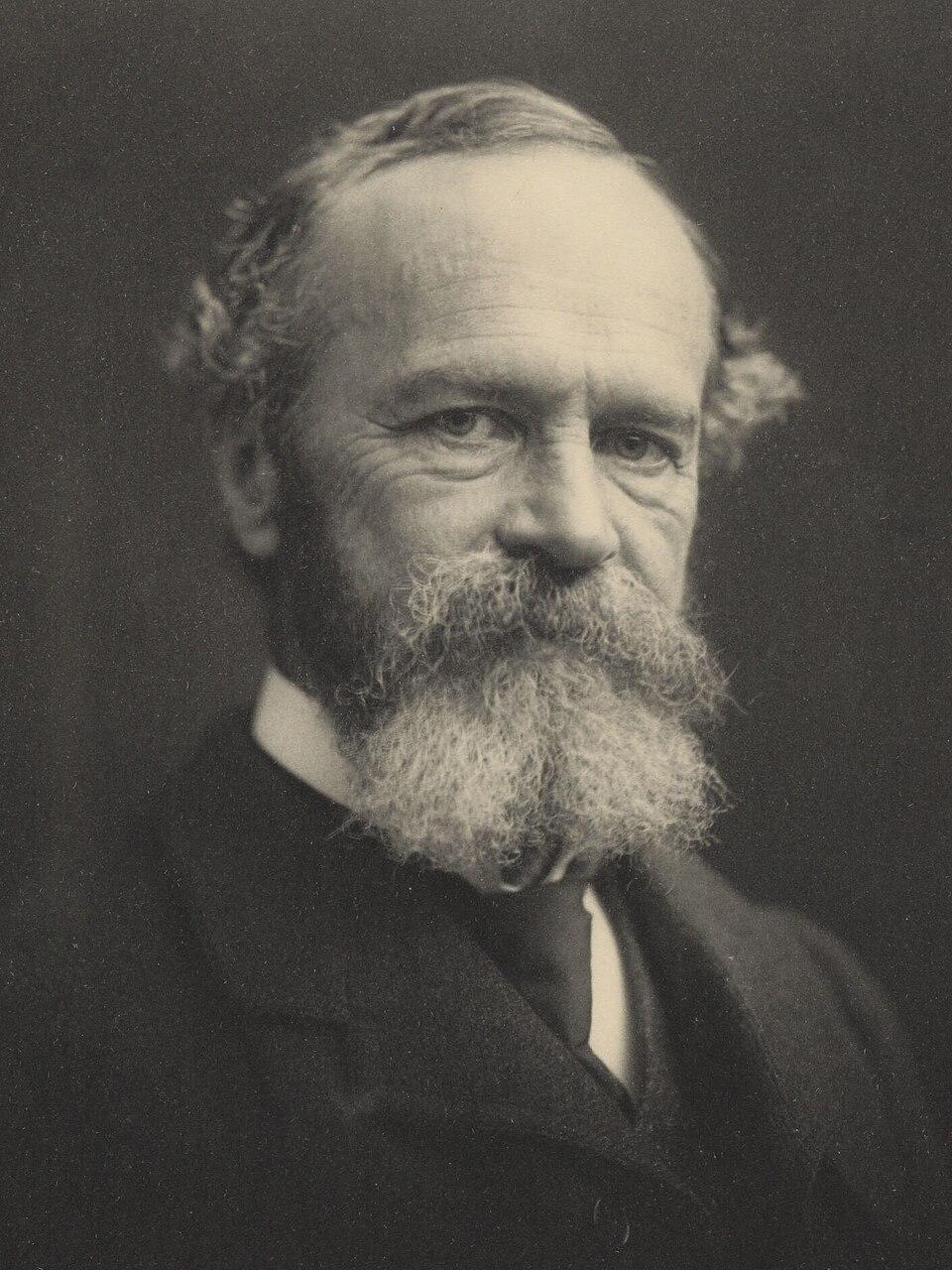
William James
American psychologist and philosopher
Born in New York City, 1842. Died in Chocorua, New Hampshire, 1910.
A founder of modern psychology who studied religious experience and psychical research with an open but critical mind.
Biography
William James trained as a physician at Harvard and spent his career teaching there, moving from physiology to psychology and then to philosophy. His two-volume Principles of Psychology (1890) helped to establish psychology as a science in the United States, and he later became the leading voice of the philosophy known as pragmatism.
Alongside this mainstream career he pursued a lifelong interest in psychical research. He helped to found the American Society for Psychical Research in the 1880s, served as president of the British society in 1894–95, and for many years studied the Boston medium Leonora Piper.
Historical context
James worked when psychology was separating from philosophy and when spiritualism was a mass movement. He insisted that unusual experiences were data to be examined, neither accepted on faith nor dismissed without looking.
Work and ideas
In his 1898 lecture Human Immortality he argued that the dependence of thought on the brain does not settle the question of survival, because the brain might transmit or filter consciousness instead of producing it.
The Varieties of Religious Experience (1902) studied conversion and mysticism through first-hand reports, and proposed four marks of mystical experience: it is hard to put into words, it feels like knowledge, it is brief and it comes unbidden.
Near the end of his life he wrote that after twenty-five years of psychical research he was no closer to a firm conclusion than when he began.
Key concepts
- Stream of consciousness
- His description of mental life as continuous and flowing, not a chain of separate ideas.
- Transmission theory
- The suggestion that the brain may transmit or limit consciousness as well as, or instead of, generating it.
- Marks of mystical experience
- Ineffability, a sense of insight, transience and passivity.
Criticism and limits
Many of James's scientific colleagues thought his psychical research a waste of his talents, and the mediums he studied never produced evidence that convinced sceptics. The transmission theory is logically possible but, as James admitted, it is not supported by direct evidence.
References
James, W. (1890). The Principles of Psychology. New York: Henry Holt.
Scientific researchJames, W. (1898). Human Immortality: Two Supposed Objections to the Doctrine. Boston: Houghton, Mifflin.
PhilosophyJames, W. (1902). The Varieties of Religious Experience. New York: Longmans, Green.
Scientific researchJames, W. (1909). The confidences of a "psychical researcher". The American Magazine, 68, 580–589.
Philosophy