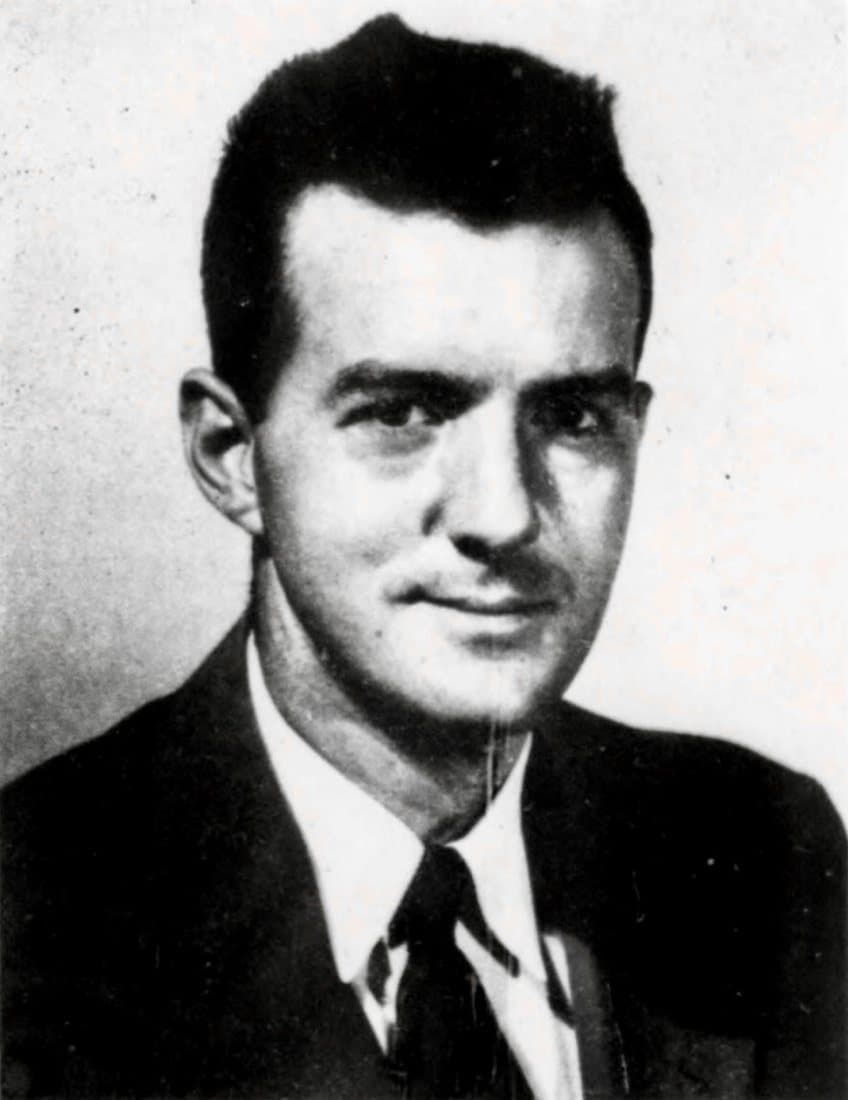
Ian Stevenson
Psychiatrist, University of Virginia
Born in Montreal, 1918. Died in Charlottesville, Virginia, 2007.
He spent four decades investigating young children who reported memories of a previous life.
Biography
Ian Stevenson graduated in medicine from McGill University and worked in psychosomatic medicine and psychiatry before becoming chairman of the Department of Psychiatry at the University of Virginia in 1957.
In 1960 he published an essay reviewing reported cases of people who claimed to remember a previous life. It drew the attention of Chester Carlson, the inventor of xerography, whose funding allowed Stevenson to give up his chairmanship and, in 1967, to found a research unit now called the Division of Perceptual Studies. He travelled for the next forty years investigating cases on five continents.
Historical context
Stevenson worked largely alone and outside the mainstream of psychiatry. He published in medical journals and wrote in a deliberately dry, legal style, hoping that the quality of the documentation would earn a hearing.
Work and ideas
He concentrated on young children, usually between two and five, who spoke spontaneously about another life. He interviewed the child, the family and independent witnesses, tried to establish what the child had said before the two families met, and compared the statements with the facts of a deceased person's life.
He also documented birthmarks and birth defects that he reported as corresponding to wounds on the deceased person, the subject of his two-volume Reincarnation and Biology. The unit he founded holds records of more than 2,500 cases.
Key concepts
- Cases of the reincarnation type
- His neutral term for the cases, which avoids asserting that reincarnation is the explanation.
- Suggestive evidence
- His consistent position that the cases suggest reincarnation without proving it.
- Birthmark cases
- Cases in which a child's birthmark is said to match a wound on the person whose life they describe.
Criticism and limits
Critics, notably the philosopher Paul Edwards, argue that most cases come from cultures that expect reincarnation, that families often met before any investigator arrived, and that interviews through interpreters invite error. A former research assistant also questioned how leading some of the interviews were. Stevenson answered many of these points and conceded that no single case was beyond doubt.
References
Stevenson, I. (1974). Twenty Cases Suggestive of Reincarnation (2nd ed.). Charlottesville: University Press of Virginia.
Scientific researchStevenson, I. (1977). The explanatory value of the idea of reincarnation. Journal of Nervous and Mental Disease, 164(5), 305–326.
Scientific researchStevenson, I. (1997). Reincarnation and Biology: A Contribution to the Etiology of Birthmarks and Birth Defects. Westport, CT: Praeger.
Scientific researchEdwards, P. (1996). Reincarnation: A Critical Examination. Amherst, NY: Prometheus Books.
Sceptical view