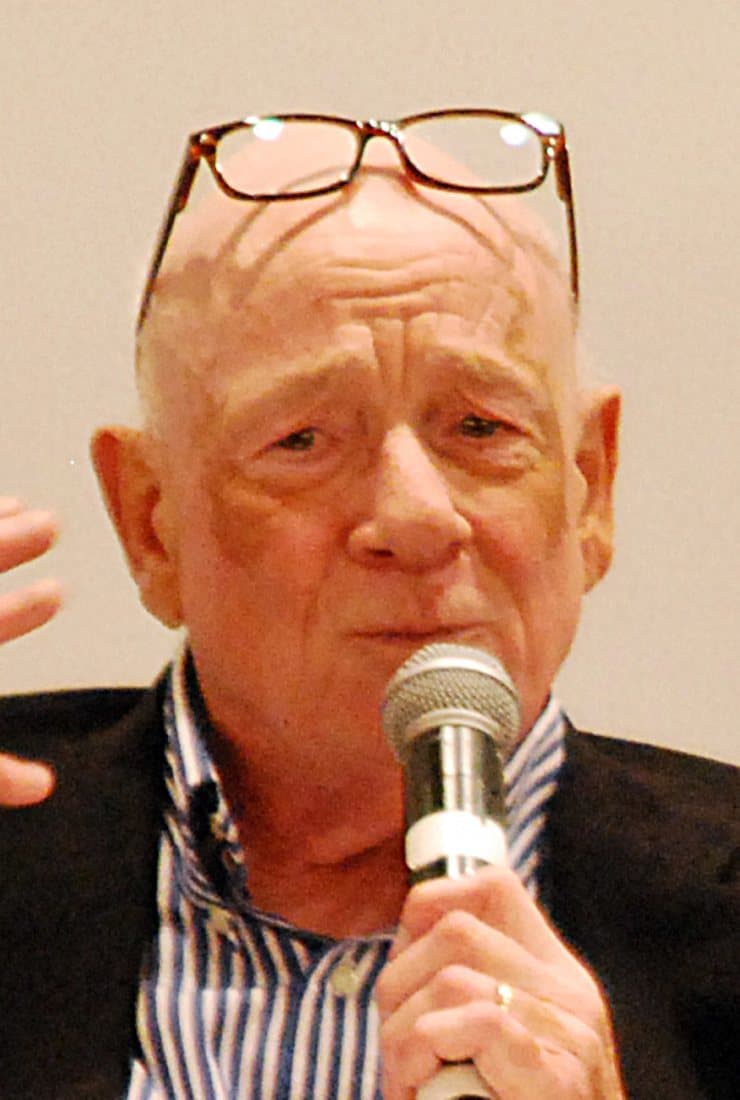
Raymond Moody
American philosopher and physician
Born in Porterdale, Georgia, 1944.
He introduced the term "near-death experience" and described the features that later researchers set out to measure.
Biography
Raymond Moody took a doctorate in philosophy at the University of Virginia and then trained as a physician at the Medical College of Georgia. While a philosophy student he heard the psychiatrist George Ritchie describe an experience Ritchie had had when pronounced dead as a young soldier, and he began to collect similar stories.
His first book, Life After Life, was published in 1975 while he was still a medical student. It drew on about 150 accounts, became an international bestseller, and gave the phenomenon the name by which it has been known ever since.
Historical context
Improved resuscitation in the 1960s and 1970s meant that far more people were surviving cardiac arrest, and so returning with stories to tell. Moody's book gave doctors and patients a shared vocabulary for something that had rarely been discussed.
Work and ideas
Moody identified elements that recur across accounts, among them a feeling of peace, a sense of leaving the body, a dark tunnel, a being of light, a review of one's life and a border or point of return. He stressed that no single account contains them all.
He stated plainly in the book that he was not offering proof of life after death. His later work explored related experiences, including those reported by people at the bedside of the dying, which he called shared death experiences.
Key concepts
- Near-death experience
- The term he introduced in 1975.
- The common elements
- A set of recurring features that later researchers turned into measurable scales.
- Shared death experience
- An experience reported by a healthy person present at another's death.
Criticism and limits
Life After Life was a collection of stories gathered informally, with no comparison group and no checking of medical records, as Moody acknowledged. Some of his later interests, such as attempts to evoke visions of the dead by gazing into mirrors, moved well away from conventional research.
References
Moody, R. A. (1975). Life After Life. Covington, GA: Mockingbird Books.
Personal testimonyMoody, R. A., with Perry, P. (2010). Glimpses of Eternity. New York: Guideposts.
Personal testimonyGreyson, B. (1983). The Near-Death Experience Scale: Construction, reliability, and validity. Journal of Nervous and Mental Disease, 171(6), 369–375.
Scientific research