Module · 7 minutes
An introduction to consciousness
Why the nature of awareness sits underneath every question about what might survive death.
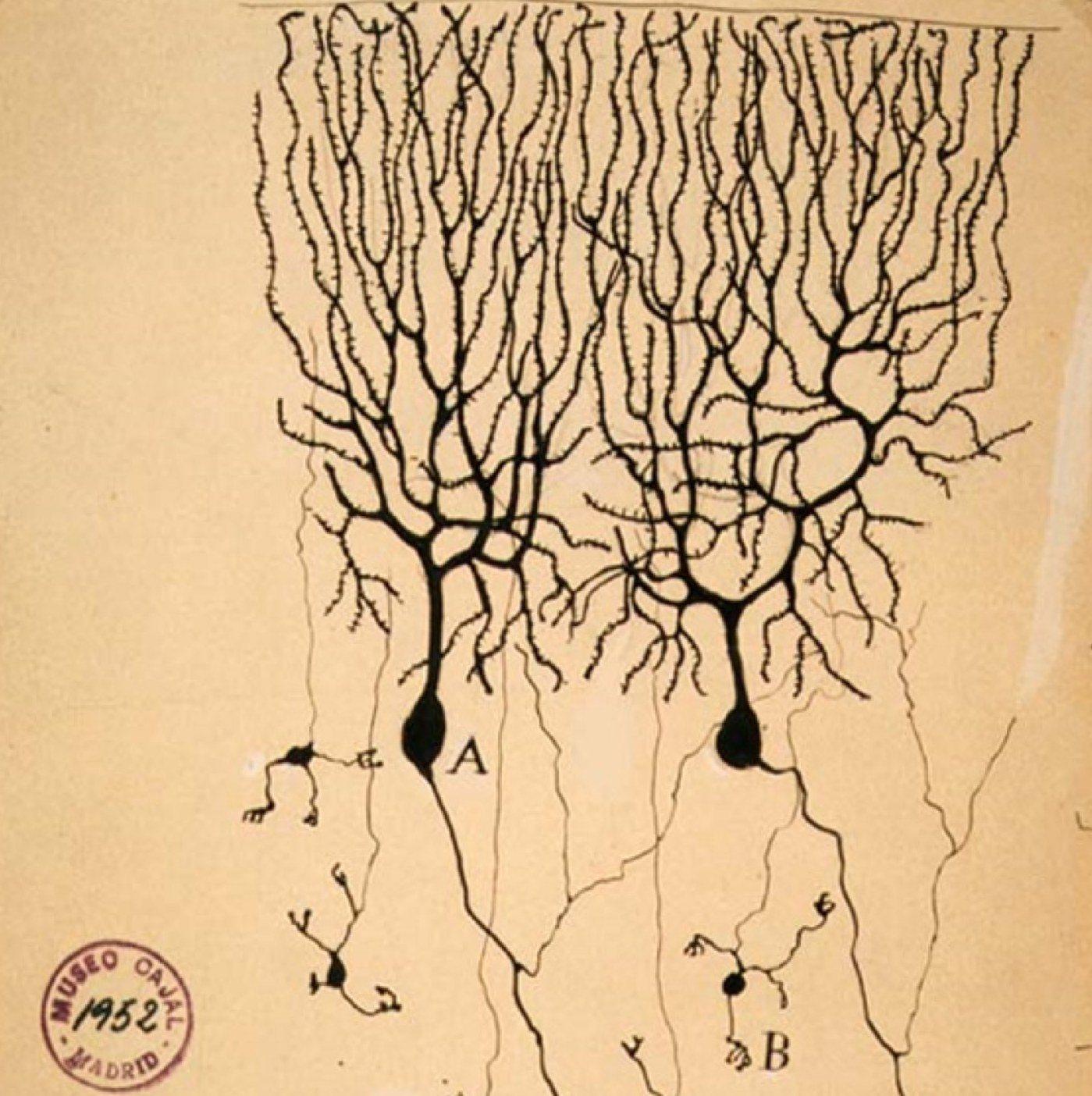
Santiago Ramón y Cajal, Purkinje cells, 1899
Part 1 of 4
The fact of experience
Consciousness is the fact that there is something it is like to be you: to see red, to feel pain, to think a thought. William James described it in 1890 as a stream, continuous and always changing.
Science has learned a great deal about which brain processes go with which experiences. Why any physical process should be accompanied by experience at all is a different question.
Part 2 of 4
The hard problem
In 1995 the philosopher David Chalmers called this the hard problem. Explaining how the brain processes information is difficult but tractable. Explaining why that processing is felt is, he argued, a problem of another kind.
Many scientists and philosophers reject the distinction and expect the puzzle to dissolve as neuroscience advances.
Part 3 of 4
Theories of the conscious brain
Leading scientific theories locate consciousness in what the brain does. One holds that information becomes conscious when it is broadcast widely across the brain. Another ties consciousness to how much information a system integrates. A third describes experience as the brain's best prediction about the world and the body.
Part 4 of 4
Why it matters here
If consciousness is produced entirely by the brain, it ends when the brain does. This is the mainstream scientific view, and the evidence that changes to the brain change the mind is very strong.
A minority view, going back to William James, asks whether the brain might shape or filter consciousness without wholly producing it. This remains a hypothesis without direct experimental support. How you weigh these two views shapes how you read everything else on this site.
Check your understanding
A short quiz
The questions are about what the sources say and what kind of evidence they are. None asks what you believe.
0 of 4 answered.